

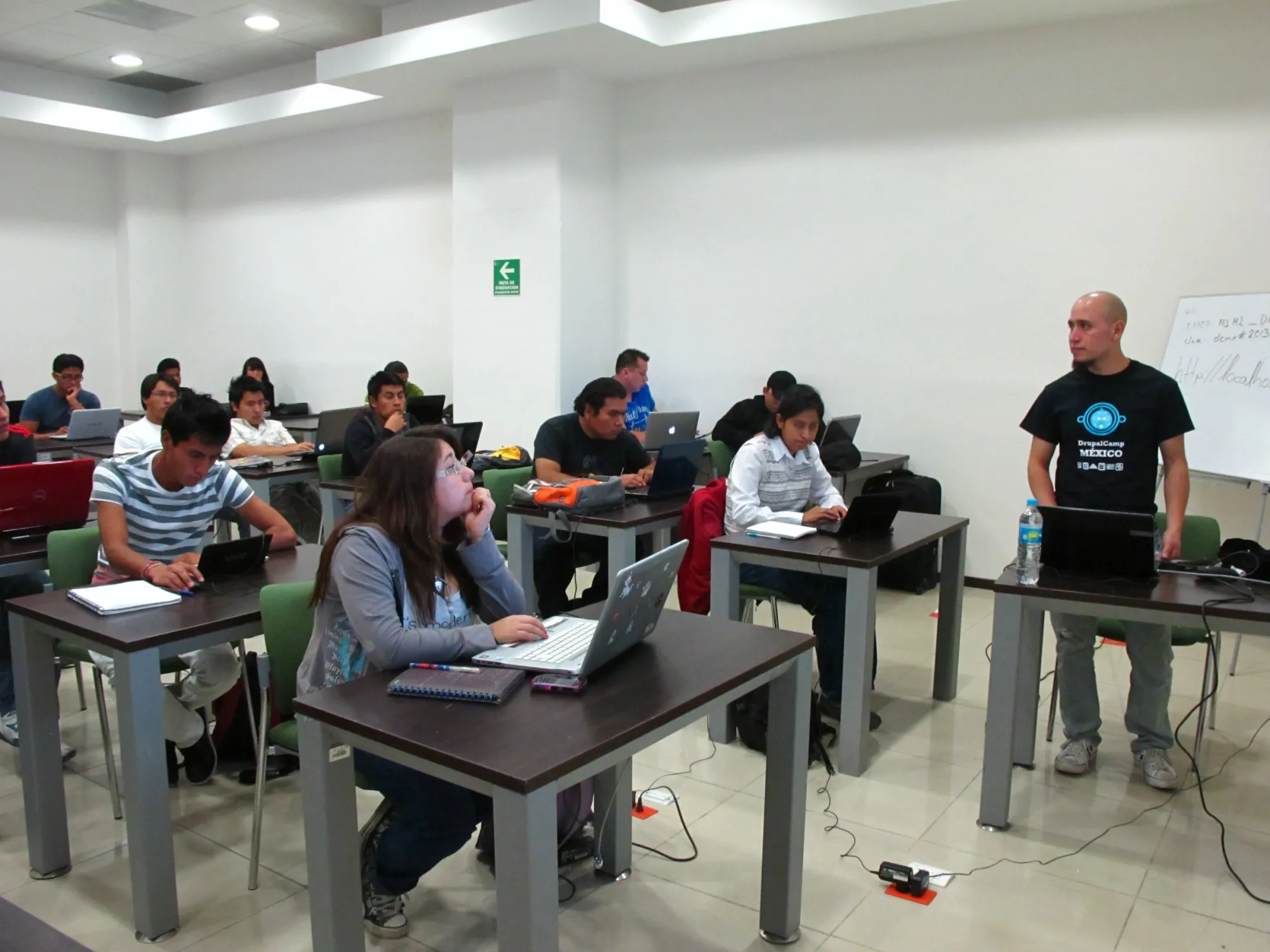
Photo: Loominade, CC BY-SA 3.0, via Wikimedia Commons
What we do
Six things, all of them shaped by what members needed on real projects.

Discussions
A forum that answers the question you actually have
Discussions are organised by topic: migrations, LocalGov Drupal, accessibility, hosting, procurement, content design. Search before you ask, and you will often find that a council down the road answered it last month.
- Mark the reply that solved it, so the next person finds it quickly.
- Follow topics and get a weekly digest instead of a flood of notifications.
- Threads stay private to members.

Working groups
Focused groups with a clear end point
Anyone can propose a working group. It needs a problem, at least three members from different organisations and an idea of what “done” looks like: a shared component, a guide, a set of test scripts.
Groups meet on calls, keep notes in the community platform and publish their outcome for every member, whether or not they took part.

Shared project pipeline
From “we need this too” to a released module
Many public-sector Drupal sites need the same things: a better events listing, a bin-collection lookup, an accessible map. The pipeline is where those ideas are proposed, discussed and claimed.
Each project shows who needs it, who is working on it and where it is up to. Finished work is released on drupal.org under an open licence, so it outlives any one contract.

Module radar
Honest notes on the modules we depend on
The radar collects members' experience of contrib modules in production, sorted into adopt, trial, hold and avoid. Every rating comes with a reason and the version it applies to.
It is a quick way to sense-check an architecture decision, and a reminder of which modules could use a maintainer from our sector.
Mentoring
Someone to ask, without the awkwardness
Mentors list what they can help with: Drupal back end, theming, accessibility, moving from an agency into the public sector, or the reverse. Mentees ask for a conversation, and the two agree how often to meet.
It is free, it is voluntary, and either side can end it at any time.

Events
Small, practical and usually free
Regional meetups in pubs and council offices, monthly online show-and-tells, accessibility clinics where you bring a page and leave with a fix list, and upgrade sprints when a new Drupal major lands. Members propose and run them.
All of this is free for members
If you work with Drupal in or for the public sector, you are welcome.
Join the community